 kinto creativeKinto Creative
Work with us

Key Takeaways
Want to see these on real sites first? Skip down to six personal trainer websites we’ve built, with what each one gets right.
A visitor lands on your homepage. They’ve never heard of you. They have about 10 seconds before they decide whether to stay or hit back. Research on website credibility consistently shows that visitors form a first impression almost immediately, and that impression is based largely on what they can read above the fold.
Your homepage needs to answer three questions before that window closes:
The other homepage trap is the hero image. A full-screen gym selfie doesn’t answer any of those three questions. It just delays the moment a visitor finds what they came for. A clear headline, a one-line location, and a visible CTA button will outperform an atmospheric photo every time.
If you’re building a site from scratch, your personal trainer homepage is the most important page to get right. Everything else on this list supports the homepage.
Not sure what yours is costing you? We’ll look at it for you, free.
Someone deciding whether to train with you wants to know it has worked for people like them. A wall of five-star quotes from first names doesn’t do that. Two or three specific results from the kind of client you want more of, on the homepage, does.
Your Google reviews count twice here. They’re what people read on the map before they ever reach your site, and quoting the best ones on your homepage puts them where people decide. They’re worth asking for properly: when we started working with Yerby Coaching in July, her Google profile had 4 reviews. By October it had 26, all five stars.
Luke Hayes Fitness in Newmarket goes a step further. The homepage asks “Where are you starting from?” and gives six answers, like “I’m over 40 and want to get strong”. Each answer shows a review from a real client, and a WhatsApp button with the first message already written.
“Contact me for pricing.” This is the most common conversion killer on PT websites. When someone doesn’t know your rates, they don’t email to ask. They move on to the trainer who tells them upfront. UK personal trainers typically charge between £35 and £80 per session, according to OriGym’s 2025 pricing data. That’s a wide range, but showing where you sit in it builds trust immediately.
In a September 2024 Insurance Canopy survey of 133 personal trainers, 69% said they find new clients primarily through word of mouth. Look at what the other three answers were: social media, gym partnerships, paid ads. Not one trainer named their own website. That is the gap a properly converting services page walks into. Worth noting the respondents were US-based, so treat it as indicative rather than a UK figure.
A strong services page covers: session types (one-to-one, online, group), your training location or service area, package options and what’s included, and a clear starting price or price range. You don’t need to list every figure to the penny. Showing that a 10-session block starts at £450 gives a visitor enough to decide whether to enquire.
Most of your clients live or work within a few miles of where you train, and that’s how they search: “personal trainer Kilburn”, “personal training Pinner”. Your town or area belongs in your page titles, your main heading and your contact page. If you train in more than one place, give each place its own page.
JN1 Performance has a page each for Liverpool Street and Soho, with their own photos, facilities and travel directions, not one page with the place name swapped out. And it can work quickly when it’s done properly: three weeks after CS Personal Training’s new site went live, it was in Google’s top five for “personal training Pinner”.
Local SEO in your website structure and your Google Business Profile do different jobs. The website structure is what gets you ranked in organic results. Your GBP handles the Map Pack at the top of the page. Both matter. We cover the GBP connection in section 6.
For a broader look at building your client pipeline, see our guide to getting more personal training clients in the UK.
Most people who find you will be on their phone, often straight from Google Maps. So check your site on your own phone, not just a laptop. On the first screen, without scrolling, can you see who you train, where, and a button to get in touch? Can you tap the phone number to call it?
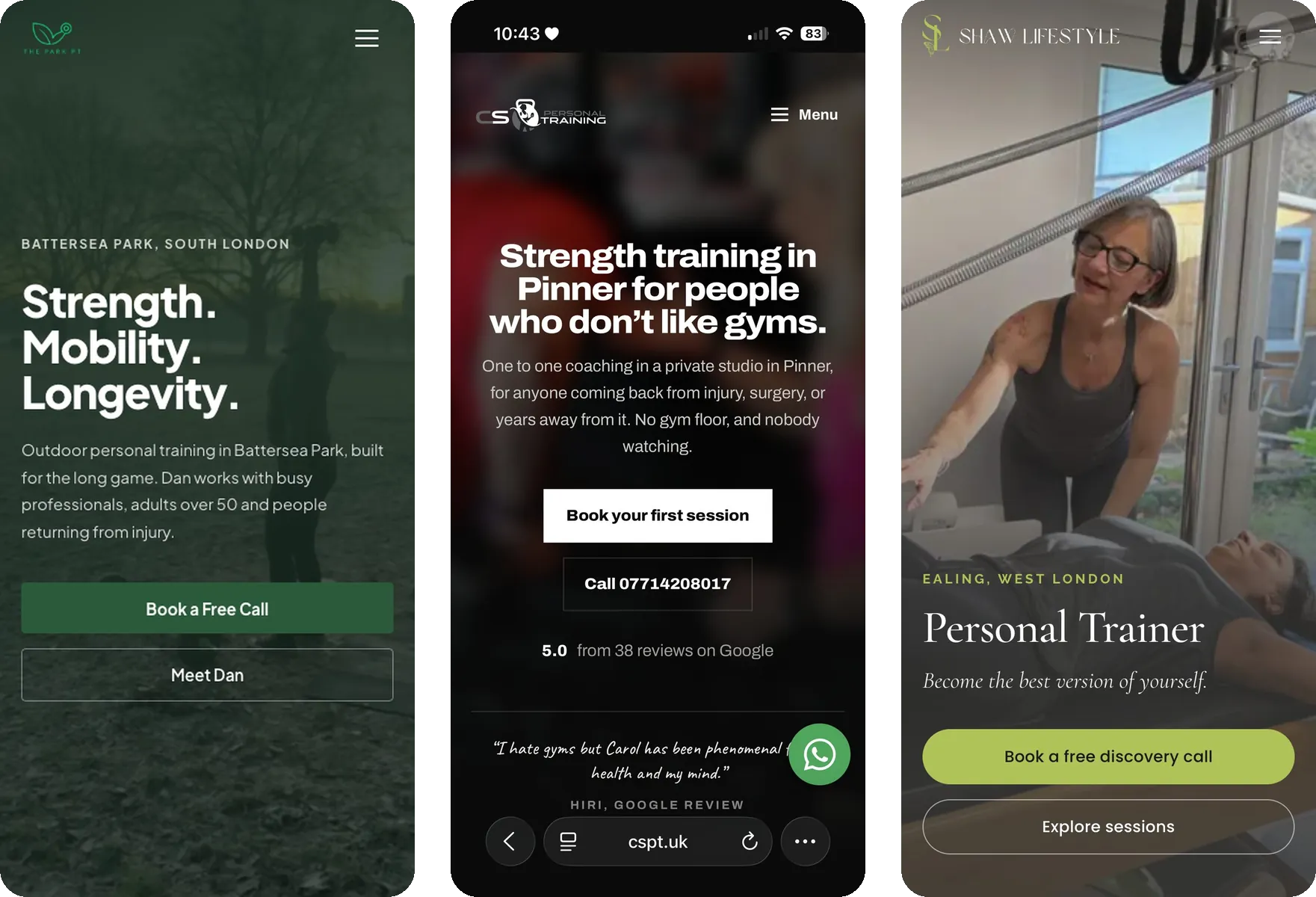
Speed matters more on a phone, too. Before we rebuilt it, Luke Hayes’s old site took two to six seconds just to start arriving on screen. If yours is slow on mobile data, fix that before anything else on this list.
In 2025, Google data via BrightLocal showed that businesses with complete Google Business Profiles are 2.7 times more likely to be considered reputable. And according to Backlinko (2024), 42% of all clicks on a local search page go to the Map Pack results. That Map Pack is driven by your GBP, not your website alone.
Here’s where most PTs miss the connection: the GBP and the website are two halves of the same system. Your GBP gets you into the Map Pack and drives traffic. Your website is where that traffic converts. A strong GBP with no website sends visitors to a dead end. A great website with no GBP means you’re invisible to 42% of local search clicks before anyone reaches your site.
As important as the six things above is knowing what drives visitors away. These are the most common trust-killers we see when personal trainers send us their sites:
Wix or Squarespace template. Fast to launch. Limited local SEO capability. Good as a starting point.
Pre-built template set up by a freelancer. Better than DIY but SEO work is usually not included. One-time cost.
Custom design built to rank locally, with SEO structure, conversion copy, and ongoing support.
The ROI maths are straightforward. If a retained client pays £200 per month, a £2,000 website pays for itself from a single new client in 10 months. Once the site is ranking, every enquiry it generates costs nothing extra.
DIY builds work as a starting point. But the SEO structure that gets a site ranking locally, the title tags, location pages, and schema markup, isn’t included in off-the-shelf Wix or Squarespace templates. That’s the gap between a site that looks fine and a site that gets found.
Here are the six essentials above on real sites. All six are personal trainers we’ve built websites for, and each name links to the full story.
Battersea Park, South London
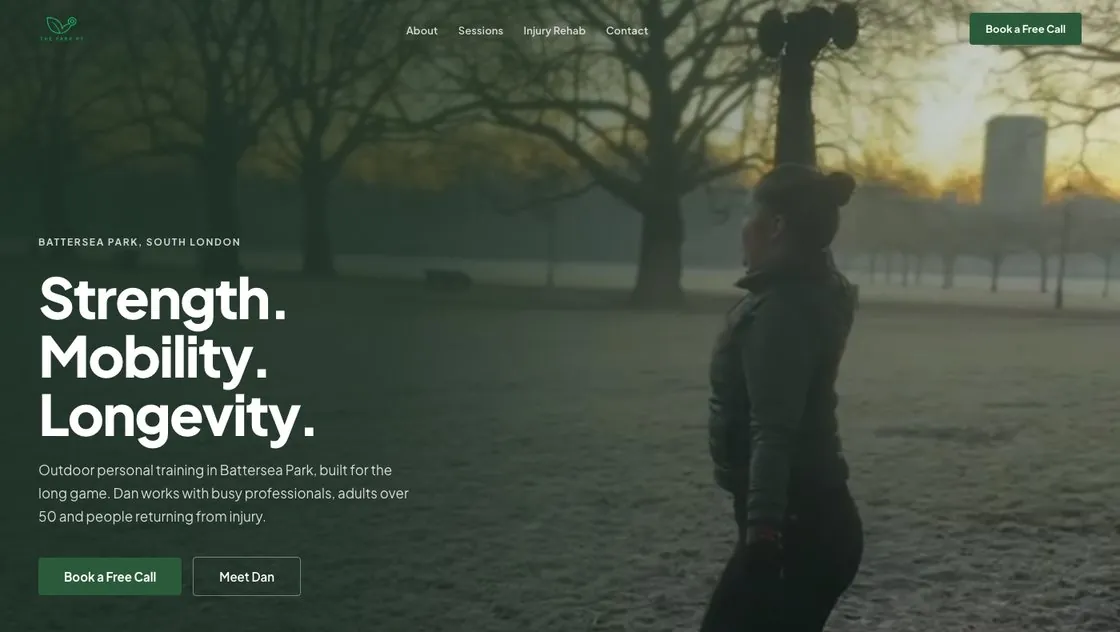
Outdoor personal training in Battersea Park. The homepage names the three kinds of people who train with Dan: busy professionals, adults over 50 and people coming back from injury. A visitor finds themselves in the first screen.
Pinner, North West London
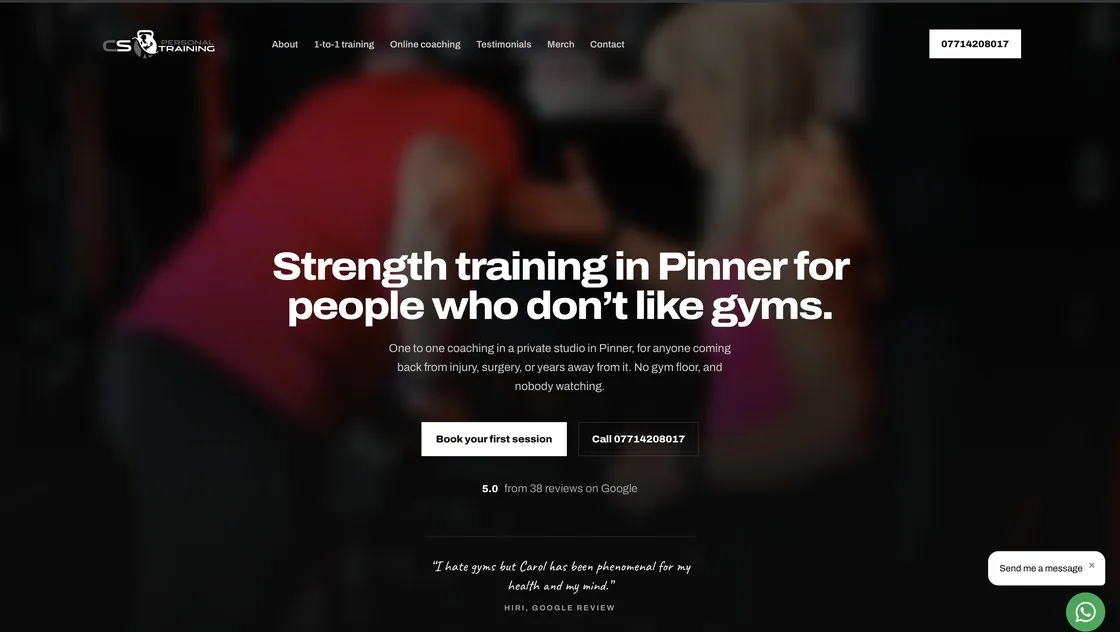
A private studio for people who don’t like gyms, and the homepage says exactly that. Prices are on the page: £65 an hour in the studio, £149 a month for online coaching. A local pharmacy found the site and approached Carol about coaching their patients.
Kilburn and West London
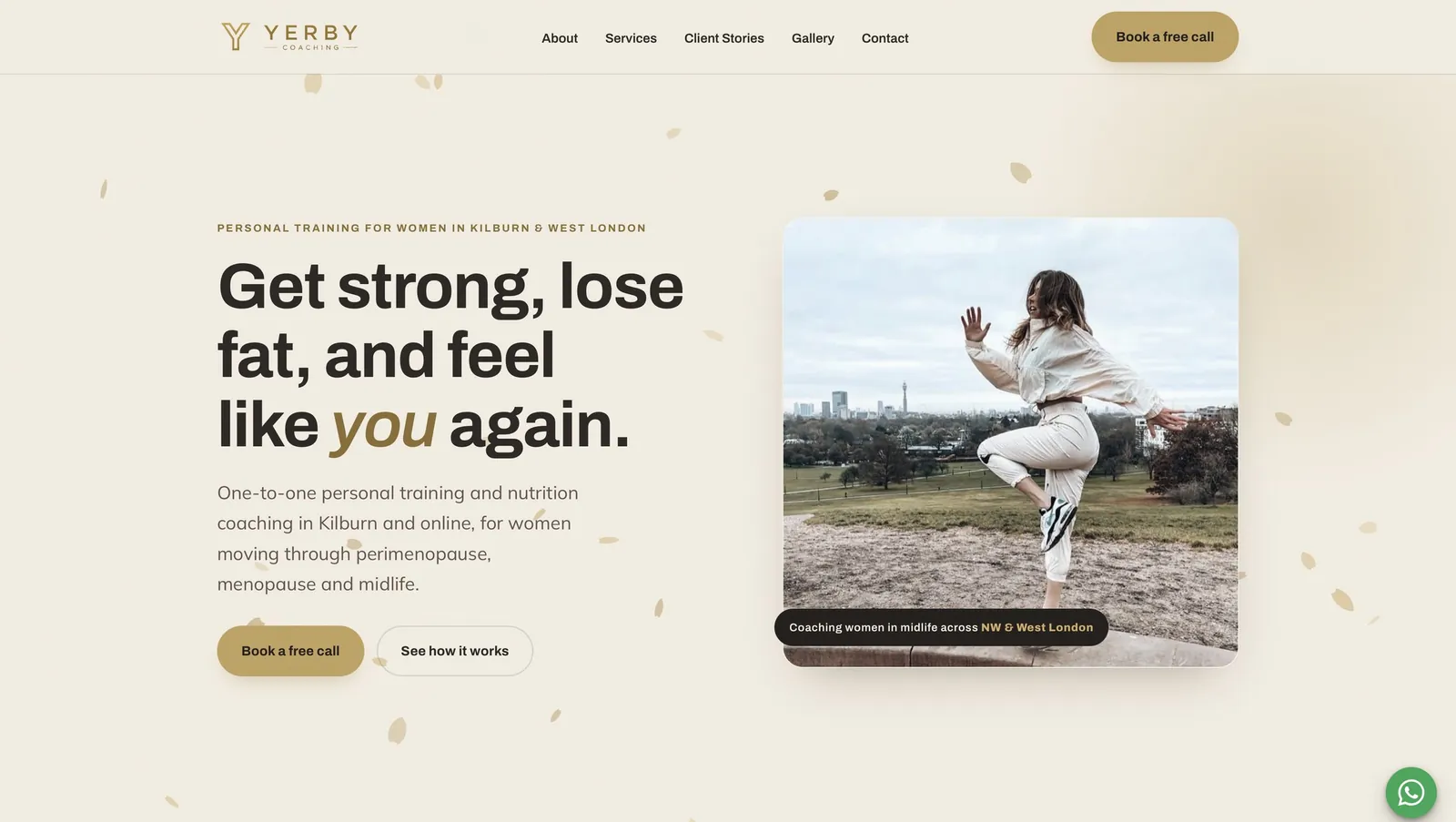
One-to-one training and nutrition coaching for women moving through perimenopause, menopause and midlife. In October 2026 she was in Google’s top three on the map for “personal trainer Kilburn”, and Google’s AI Mode listed her first for “nutrition coach Kilburn”.
Liverpool Street and Soho
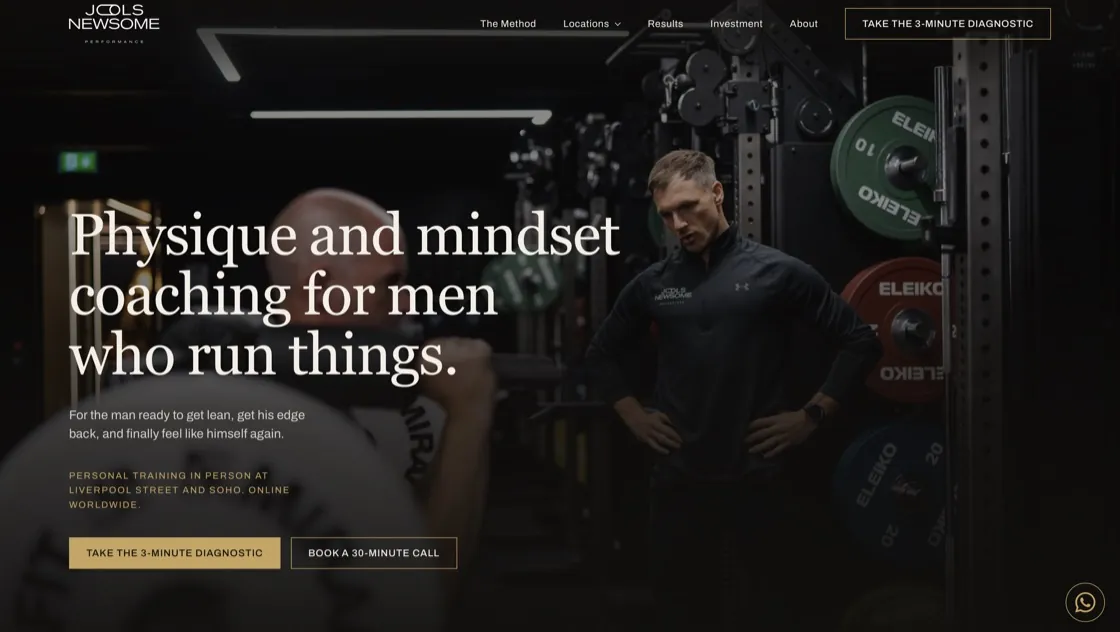
Physique and mindset coaching for men who run things. Prices are published, which is unusual at his end of the market, and the main button sends people to his three-minute diagnostic rather than a generic contact form.
Newmarket, Suffolk
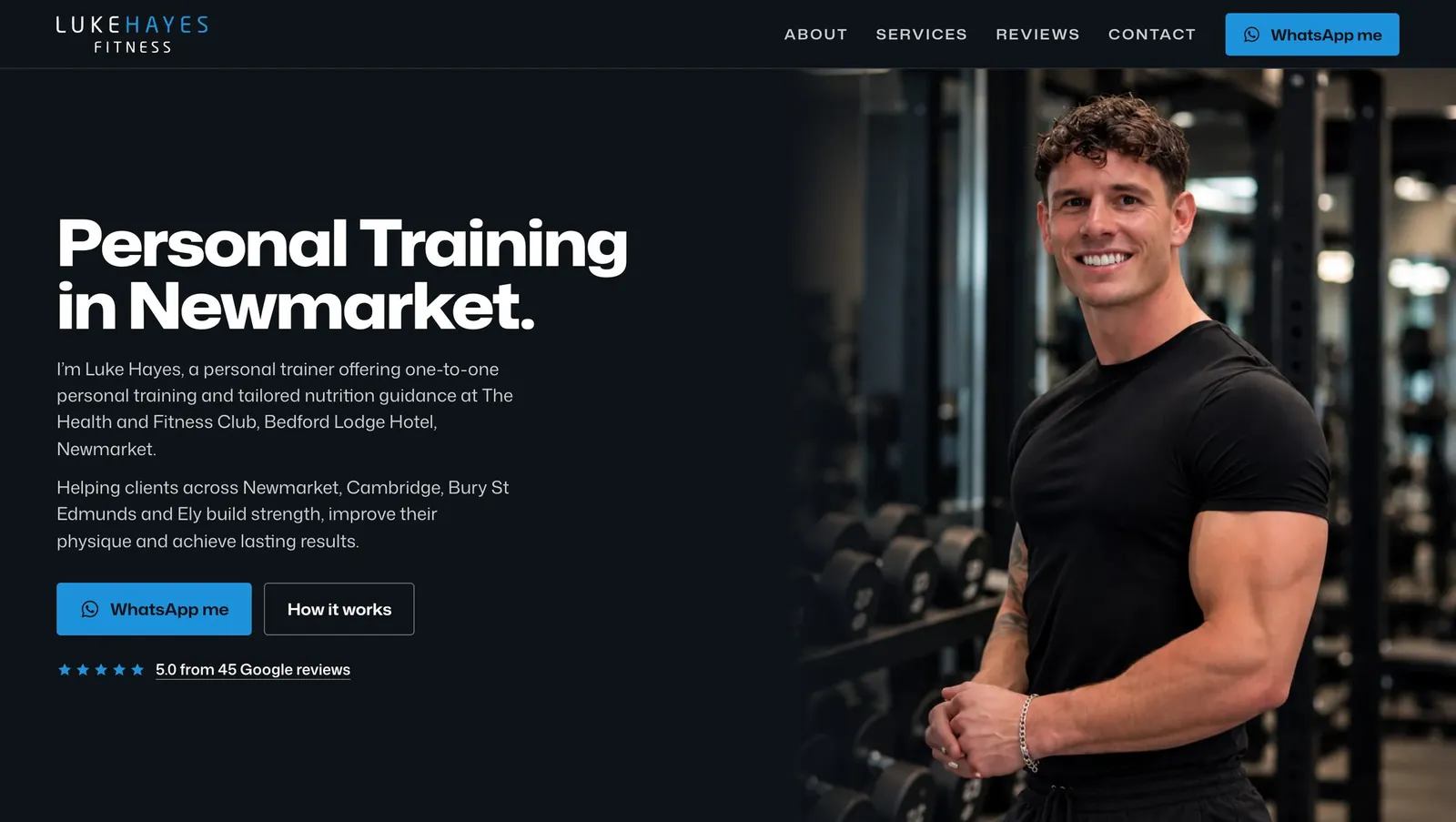
One-to-one training at a hotel health club in Newmarket. The site is written in Luke’s own voice, the homepage sorts visitors by where they’re starting from, and there’s a page each for Cambridge and Bury St Edmunds with drive times to the club.
Ealing, West London
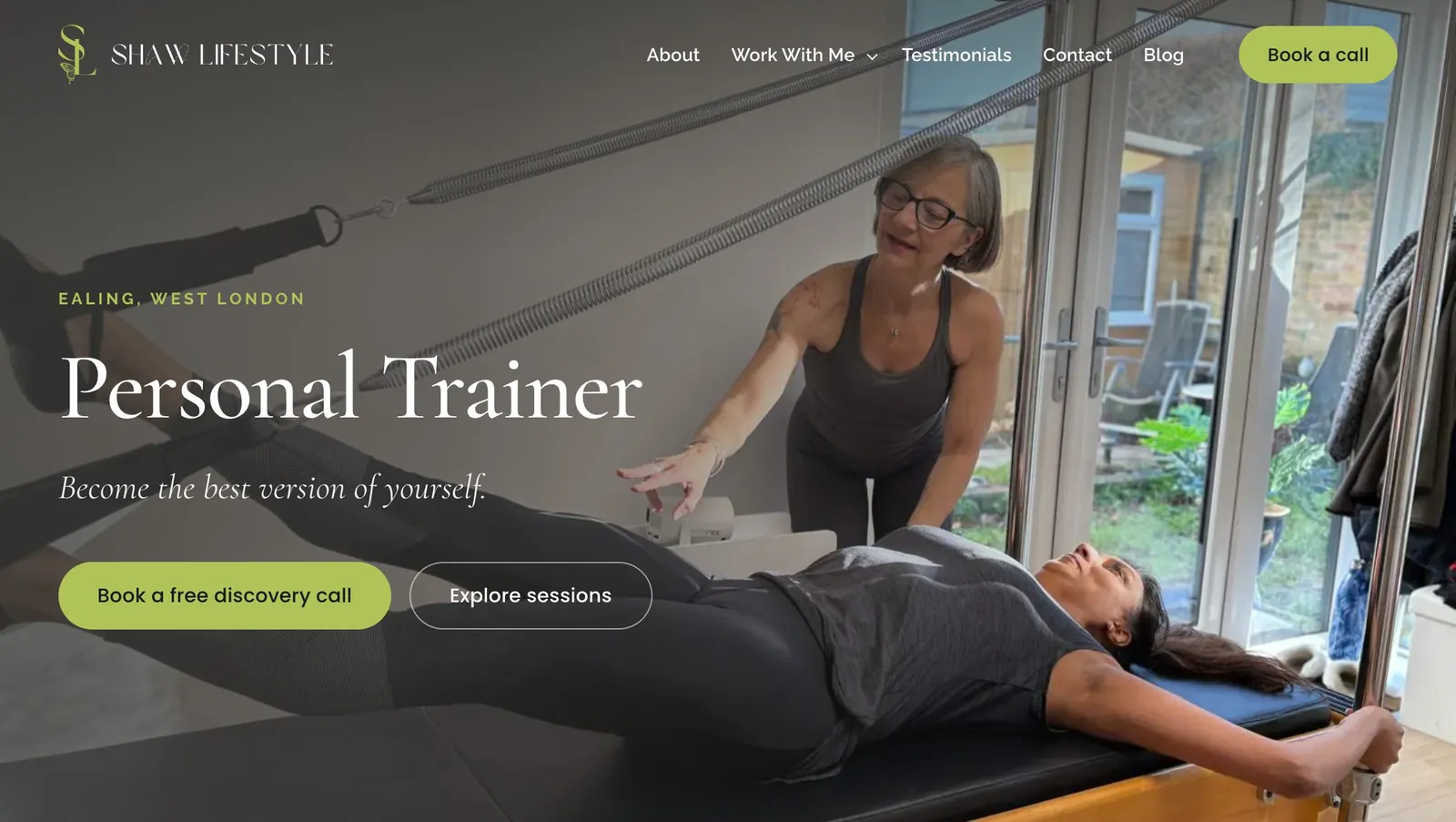
Personal training and Pilates in Ealing. Between May and September her pages showed up in Google nearly nine times as often, and ChatGPT recommends her first for a Pilates instructor in Ealing.
A website that doesn’t rank and doesn’t convert is no better than no website at all. The six things above aren’t nice upgrades. They’re the baseline for a PT website that actually works.
To recap: answer three questions on your homepage in 10 seconds, get specific testimonials and results visible, show your pricing, build location into your page structure, test your site on a mobile, and connect your GBP to your site. Both sides of the local visibility system need to be working.
Built for personal trainers. Focused on clients.
Builds from £497, live in 7 to 10 working days, with the local SEO foundations in place from day one.
See our personal trainer website packages →You’ve just read what a personal trainer website needs to do. Send us yours and we’ll tell you the three things costing you enquiries. Free, and it takes us about fifteen minutes.